You Have an Active Leak. Here’s What to Do First.
Before you call anyone, a few things matter more than speed, containing the damage, documenting what you’re seeing, and knowing what you’re actually diagnosing.
Last updated: August 2026
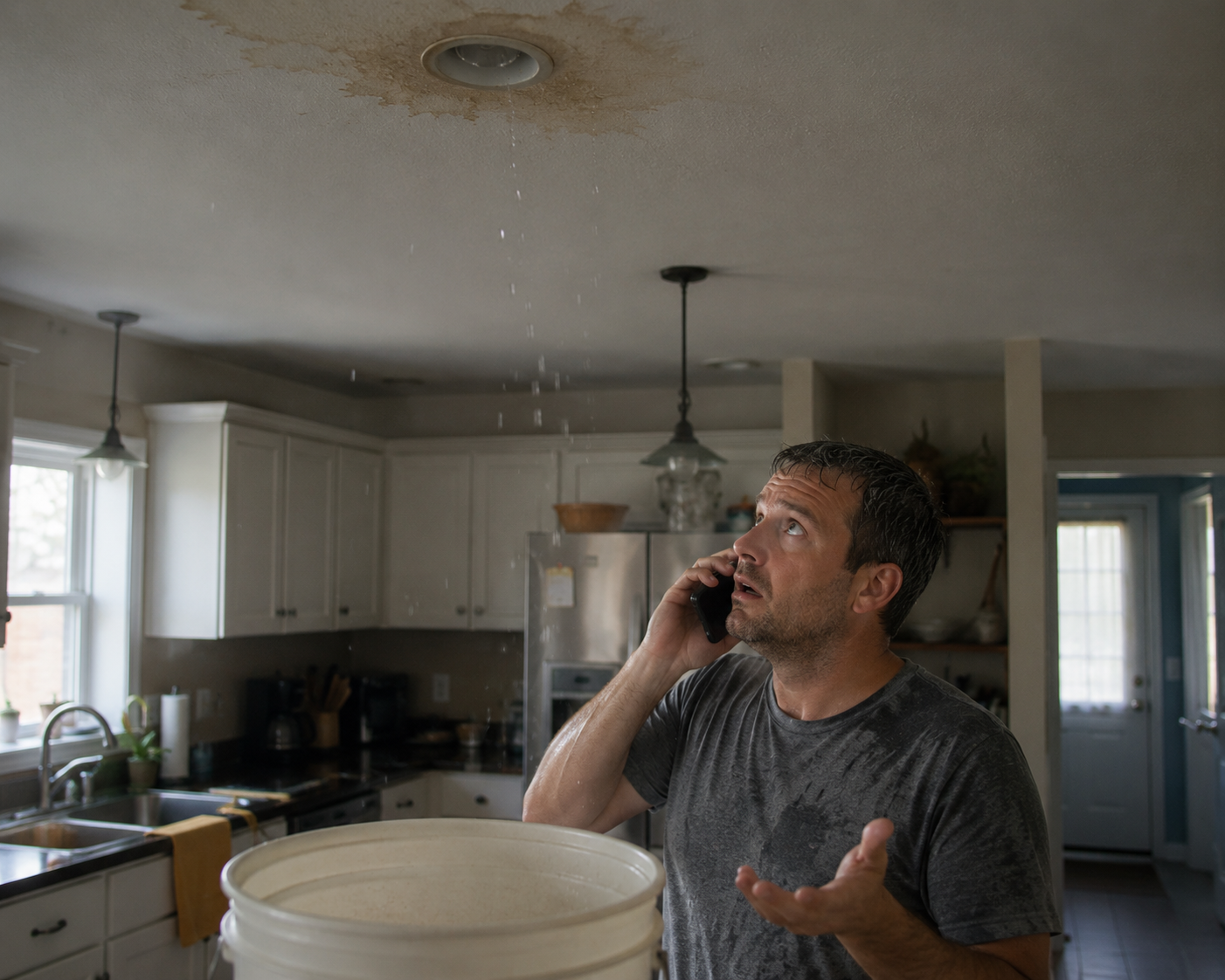
Roof Is Leaking, What to Do Right Now: Contain and Document
If water is actively coming through, the first priority isn’t finding a contractor, it’s limiting damage to your home. Place a bucket or container under the drip. If there’s a bulge in the ceiling, a small controlled hole in the center of the bulge, with a bucket underneath, releases trapped water before it fails on its own and does more damage. Move anything valuable out from underneath the affected area. Then take photos and a short video of the damage as it looks right now, including any visible water line or stain pattern, this documentation matters if insurance ends up involved.
Is It Actually the Roof?
This is the question worth asking before you call anyone, since a meaningful share of what looks like a roof leak is actually condensation, an HVAC issue, or a plumbing problem with nothing to do with the roof surface at all. If the stain appeared during or right after a storm, roof involvement is likely. If it appeared during a stretch of hot, humid weather with no rain, or seems tied to when the air conditioning runs, condensation is worth ruling out first. The full explanation of why this happens and how to tell the difference is in Building Physics: Condensation, Dew Point, and Hygrothermal Movement, worth a read before you assume the worst about your roof.
If It Is the Roof, Where to Look
Real roof leaks concentrate around specific areas far more often than the open shingle field itself, chimneys, skylights, valleys, and roof edges account for a disproportionate share of actual leaks. The Details That Matter walks through exactly why these areas fail and what a contractor should be checking first, worth knowing before that first inspection so you can tell whether the diagnosis you’re getting actually makes sense.
Questions to Ask the Contractor Who Comes to Look
Ask them to show you, not just tell you, where they believe the water is entering, and why. Ask whether this looks like a one-time repair or a sign of a broader issue with the roof’s age or condition. And if the timing lines up, ask directly whether they checked for condensation or an HVAC source before diagnosing it as a roof leak, a contractor with real experience won’t be offended by that question, they’ll expect it.
What This Means for You
An active leak feels urgent, and the water damage part genuinely is. But the diagnosis doesn’t have to be rushed. Contain what you can, document it, and give yourself the fifteen minutes it takes to understand what you might actually be dealing with before a contractor arrives, it makes you a much better judge of whether the answer you’re getting actually makes sense.