Regular Roof Maintenance: What to Check and How Often
Not a pitch for a maintenance plan. A practical checklist, and an honest note on what’s safe to check yourself versus what isn’t.
Last updated: August 2026
Why Maintenance Is Cheaper Than It Looks
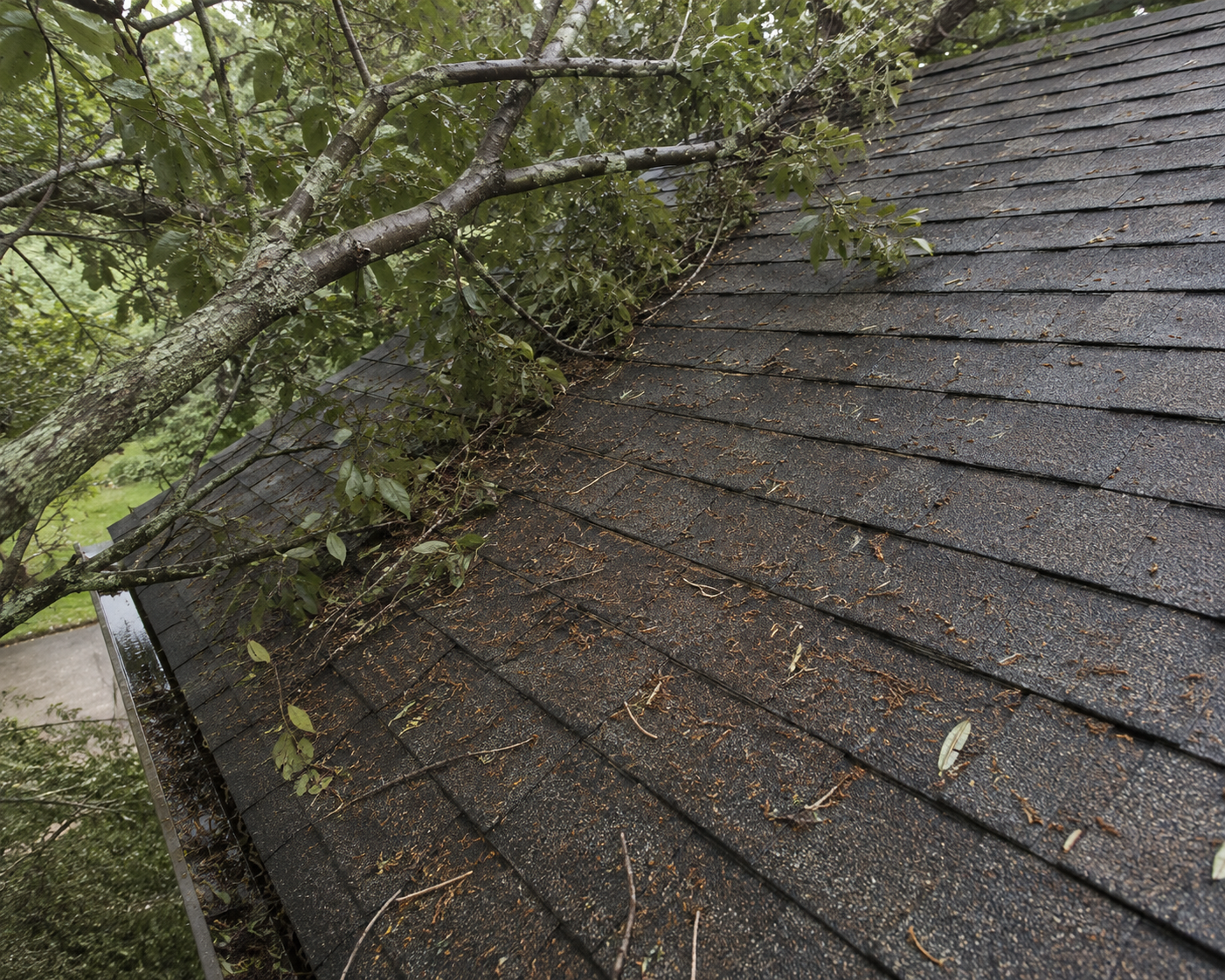
A roof maintenance checklist doesn’t need to be complicated to work. Most roof failures aren’t sudden, they’re the end result of small things left unaddressed for years, a clogged gutter, a gap in flashing, a branch resting on the surface. None of that is expensive to catch early. All of it is expensive once it’s caused real damage. A few checks, a couple times a year, is the cheapest insurance you’ll ever buy for a roof.
Roof Maintenance Checklist: 7 Things to Check
Clear gutters and downspouts of leaves and debris, clogged gutters are one of the most common causes of edge and fascia damage, covered in more depth in The Details That Matter. Remove debris that’s collected in valleys, where two roof planes meet and water concentrates, debris there traps moisture against the surface. Check gutters and downspouts for granule buildup, a sign your shingles are aging and shedding their protective coating. Visually check flashing around chimneys and vents for gaps or lifted edges, since flashing failure is the single most common real leak source. Trim back any branches overhanging or touching the roof, both to prevent debris buildup and to stop a branch from directly damaging the surface. Check attic ventilation and insulation from the inside for anything that looks like moisture staining or unusual heat buildup, covered fully in Building Physics. And after any major storm, do a walk-around even if nothing looks obviously wrong, since some damage isn’t visible from the ground.
What’s Safe to Check Yourself, and What Isn’t
Gutters, visible debris, and a general visual scan from the ground with a pair of binoculars are all things most homeowners can safely do themselves. Getting on the roof itself is a different matter entirely. Steep slopes, wet or mossy surfaces, and the simple fact that most homeowners don’t have fall protection equipment make roof-walking a real safety risk, not a minor inconvenience. If something needs closer inspection than what you can see from the ground or from a ladder at the eave line, that’s the point to call a professional rather than climbing up yourself. This isn’t about avoiding a service call, it’s the same reasoning covered in Emergency Repair vs. Maintenance, a two-person crew and proper equipment exist because the risk is real, not because the job requires it for show.
What This Means for You
A short, twice-a-year habit is genuinely the difference between catching a small problem and paying for a large one. Keep it to what you can safely see and reach from the ground, and treat anything beyond that as a reason to call someone, not a reason to skip the check altogether.